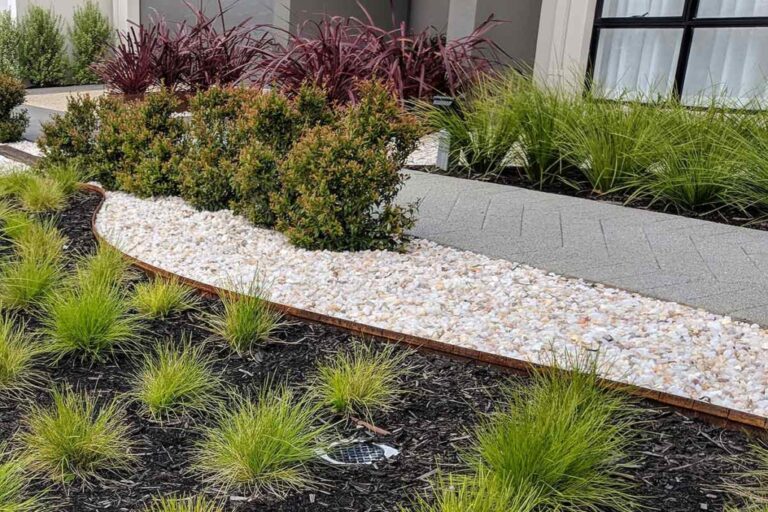
Concrete Curbing Ideas & Techniques to Transform Your Landscape
Concrete curbing offers a compelling way to combine function and aesthetics in landscape design. As a structural border, it holds soil, defines edges, and prevents overgrowth. As a design element, it introduces texture, color, and architectural continuity. When implemented well, curbing becomes a silent hero of a landscape, durable, clean, and elegant. In this article, we’ll explore deep insights, design tips, technological enhancements, real-world examples, benefits, and use cases for concrete curbing all in a clear, structured, informative style.
What Is Concrete Curbing?
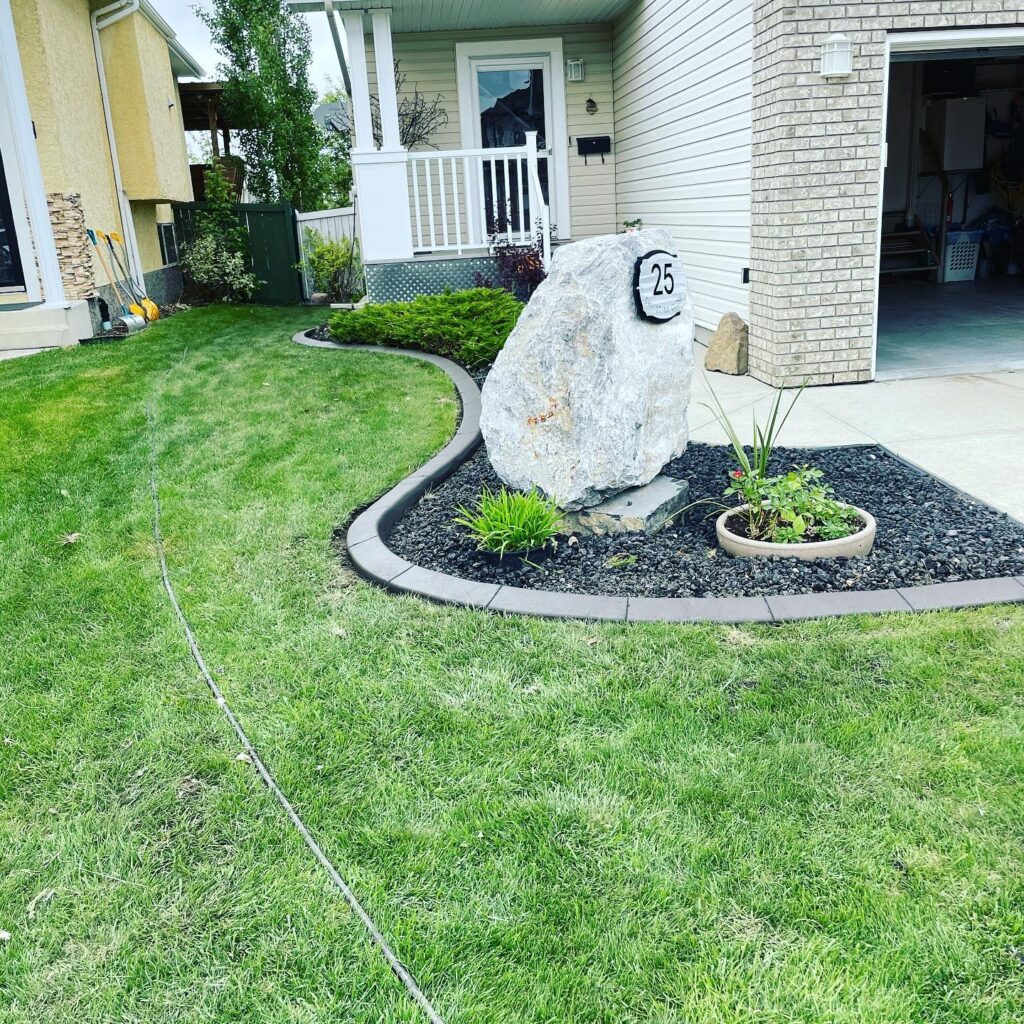
Concrete curbing refers to the creation of continuous concrete borders or edging strips that delineate garden beds, driveways, pathways, or lawns. Unlike individual blocks or stones, concrete curbs are often poured in place or extruded using special equipment to form a seamless, monolithic strip.
These curbs serve both functional and visual purposes:
-
Functionally, they prevent soil, mulch, gravel, or planting materials from spilling over onto lawns or paths.
-
Visually, they bring crisp lines and a sense of order to outdoor spaces.
Because concrete is moldable while fresh, curbing can follow curves, steps, slopes, or straight lines, allowing for a flexible design that adapts to the landscape. The craftsmanship, texture, color, and transitions elevate curbing from a mere border into a refined architectural landscape component.
Key Design Principles for Effective Concrete Curbing
To make curbing work both functionally and beautifully, several design principles are essential.
Proportion, Width & Height
Concrete curbing should be sized in proportion to adjacent elements. If your lawn is wide and open, curbs of 4 to 6 inches in height may suffice; in dramatic landscapes or sloped settings, taller curbs of 8–10 inches might be better. Width similarly matters: narrow curbs (3–4 inches) suit delicate flower beds; broader curbs (6–8 inches) can serve as walkable borders or transitions to hardscape.
Avoid overly tall curbs in flat areas they may obstruct views or look bulky. Always consider sight lines and proportion to other landscape features.
Smooth Curves & Transitions
One advantage of poured or machine-extruded curbing is the ability to form smooth curves. Harsh angles or abrupt changes break visual flow. Gentle transitions, rounded edges, or bevels soften the boundary between turf and beds. Well-executed curves can also help guide water flow or accent focal features like shrubs or sculptures.
Texture, Pattern & Finishes
Concrete curbing need not be plain. Stamped textures (slate, cobblestone, wood grain), exposed aggregate finishes (revealing pebbles), or integrally colored concrete can enhance visual richness. Using contrasting texture or color along curbs highlights edges and ties them to paving or façade materials.
When selecting a finish, consider the surroundings. If your house has stone accents, curbs with stone texture help unify the design.
Drainage & Slope Considerations
Concrete curbs must respect drainage. In sloped areas or in rainy climates, curbs should either direct water away from foundations or include relief slots or joints to prevent water from backing up. On steep terrain, curbing may be terraced or staggered to reduce soil pressure and manage runoff.
Additionally, integrally reinforcing curbing (cables, steel rod) helps resist cracking under shifting soils or freeze-thaw cycles.
Technology & Innovations in Concrete Curbing
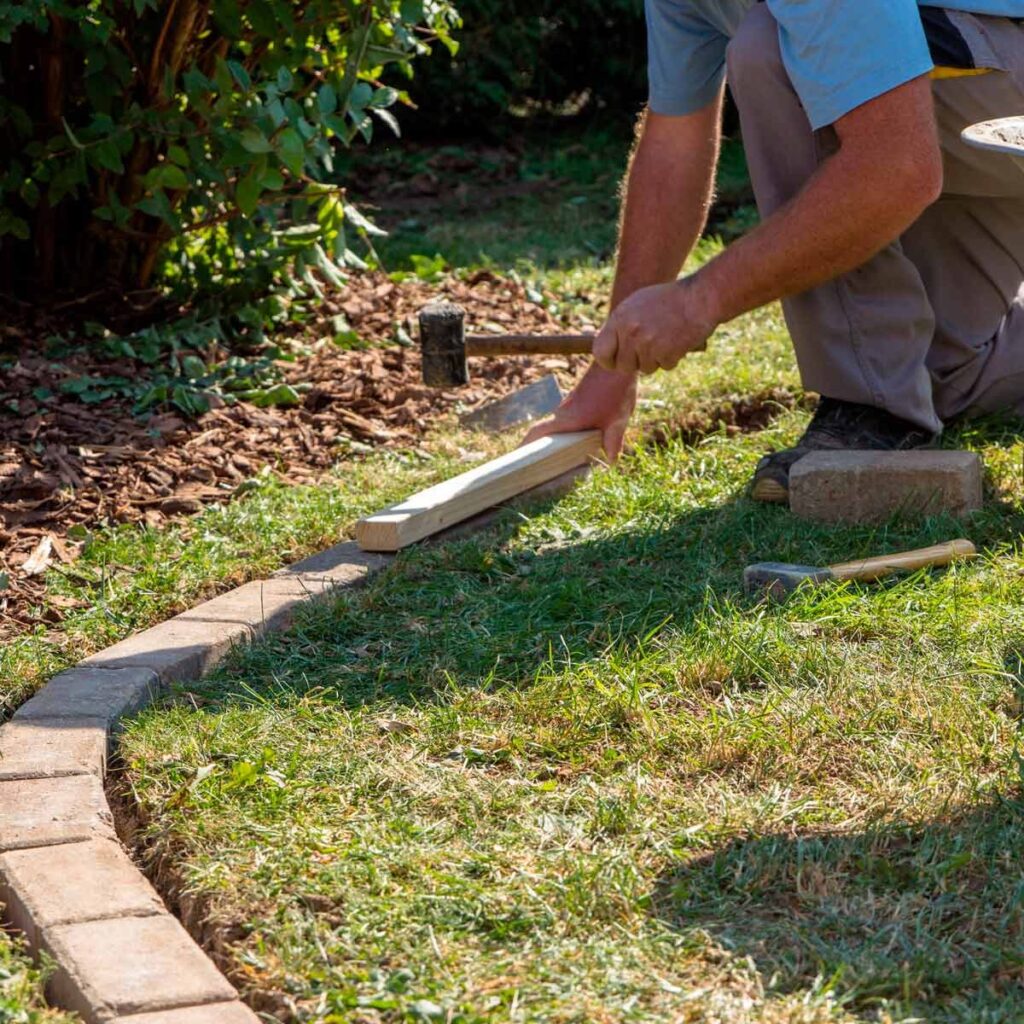
Concrete curbing has evolved beyond simple poured borders thanks to technological advancements.
Extrusion Machines & Continuous Curbing
Modern curbing machines extrude wet concrete continuously, creating seamless, joint-free borders. These machines often embed steel cable or reinforcement into the curbing as it’s laid, resulting in increased structural integrity.
This method also speeds installation and reduces the manual labor of forming individual sections. The result is a smoother visual flow with fewer weak joints.
High-Performance Concrete Mixes & Additives
Enhanced concrete mixes using polymer modifiers, fiber reinforcement, or shrinkage-reducing admixtures reduce cracking and improve flexibility. Some curbing mixes incorporate additives that resist UV, staining, or freeze-thaw damage, extending longevity and reducing maintenance.
3D Modeling & Digital Layout Planning
Before installation, landscapers now often employ 3D modeling and visualization software to plan angles, curves, and transitions. This helps clients see how curbing lines will sit relative to plants, walkways, or structures. It also allows optimization of material usage and helps avoid costly design changes in the field.
Smart Drainage Integration
In advanced designs, curbing may integrate microchannels or slots that allow controlled water infiltration or movement. In heavy rainfall regions, combining curbing with permeable surfaces or sub-surface drainage systems helps protect beds and foundations.
Examples of Concrete Curbing in Real Landscapes
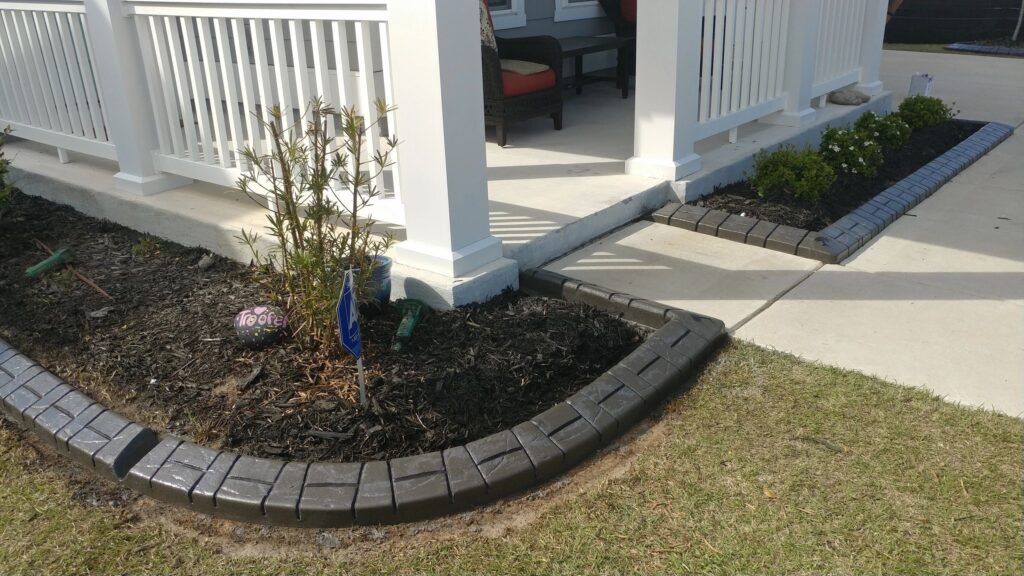
Below are five illustrative real-world examples showing different styles, functions, and design intentions of concrete curbing.
Example 1: Natural Stone-Textured Curbing in Garden Beds
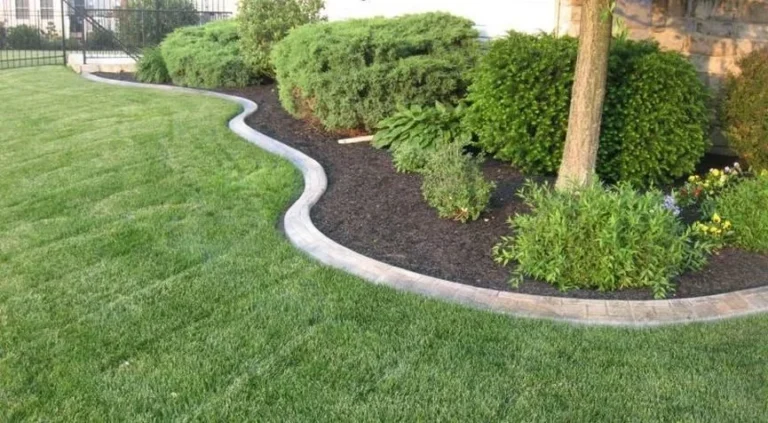
In a suburban garden, curbing was poured with a carved stone texture and tinted in earth tones. The curbs border flower beds and walkways, tying in with exterior stonework on the house façade. The textured surface reduces glare and hides surface imperfections over time. This example shows how curbing can echo surrounding materials while providing strong edging.
Example 2: Sloped Terrain Curbing with Terraced Levels
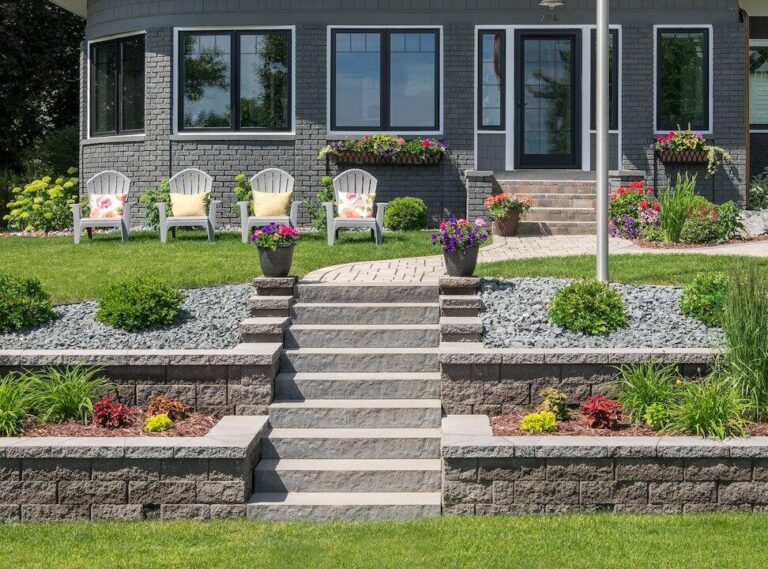
On a property with a moderate slope, the landscape designer used stepped concrete curbs in multi-tiered garden beds. Each level is separated by a curbing strip that both retains soil and segments planting zones. Drainage gaps between curbs allow water to pass while maintaining control. This demonstrates the curbing’s ability to adapt to complex topography.
Example 3: Decorative Driveway Border Curb
At the edges of a driveway, decorative curbing with a stamped brick pattern was used. It acts as a border to contain gravel or applied aggregate, while reinforcing the driveway edges against erosion. The design complements the driveway surface for a cohesive aesthetic. This shows curbing, bridging, functional l and visual roles.
Example 4: Minimalist Linear Curb for Modern Landscaping
In a modern-style garden, narrow, clean-lined concrete curbs define turf and planting zones. The smooth finishes and subtle elevation change bring crisp geometry to the landscape. This example illustrates how minimalist curbs can structure visual flow without dominating the design.
Example 5: Continuous Extruded Curb in Commercial Setting
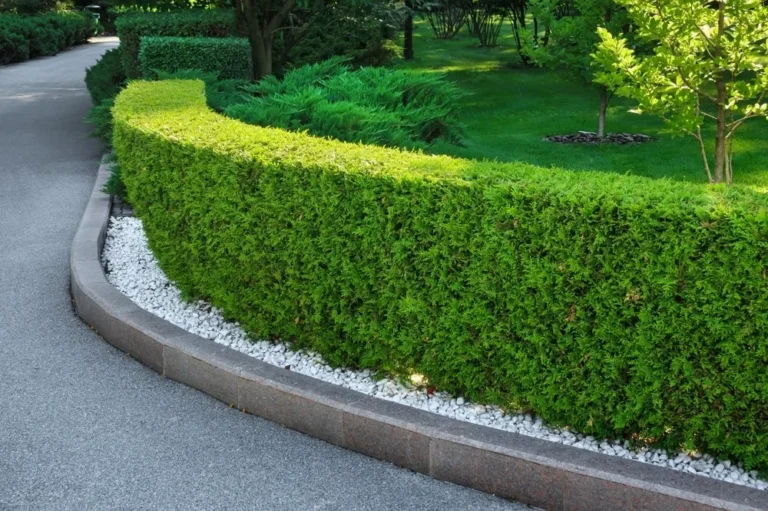
In a commercial plaza, continuous extruded curbing delineates parking islands and pathways. The clean, joint-free design reduces weed intrusion and maintenance labor. Embedded steel reinforcement makes the curbing robust against traffic. This shows curbing in a functional, high-demand context.
Benefits and Practical Advantages of Concrete Curbing
Concrete curbing offers a wide range of benefits that extend beyond aesthetics. Here’s a detailed look at its advantages:
Structural Durability and Stability
Because curbing is continuous and reinforced, it resists shifting, heaving, and absorbing minor ground movements. It doesn’t rot like wood, degrade like plastic, or separate like block systems might over time.
Low Maintenance Requirements
Once installed, concrete curbing needs minimal upkeep, occasional cleaning, and resealing if desired. It remains functional and attractive with very little effort compared to edging materials that require frequent adjustment or replacement.
Visual Definition and Order
Curbing establishes crisp edges that organize the landscape. The clear boundary between turf, beds, walkways, and mulch zones enhances visual clarity. This ordered look increases the perceived professionalism and care of the property.
Soil and Material Containment
Mulch, gravel, soil, and plant material stay where intended instead of spilling onto lawns or paths. Curbing helps prevent erosion and keeps planting zones neat and intact.
Erosion Control and Drainage Support
Properly designed curbing helps manage water flow. In concert with grading and drainage planning, curbing can reduce soil washouts, redirect runoff, and protect bed edges during heavy rains.
Increased Property Value and Curb Appeal
Landscapes with solid, elegant curbing appear better maintained and high-end. This positively influences buyer perception, making the property more appealing and potentially raising its resale value.
Safe Maintenance Boundaries
For lawn mowers, leaf blowers, or string trimmers, curbing offers a consistent, resilient edge to boundary operations. Sharp edges or soft materials fade over time, but concrete curbs stay firm.
Use Cases: How Concrete Curbing Solves Real Landscape Problems
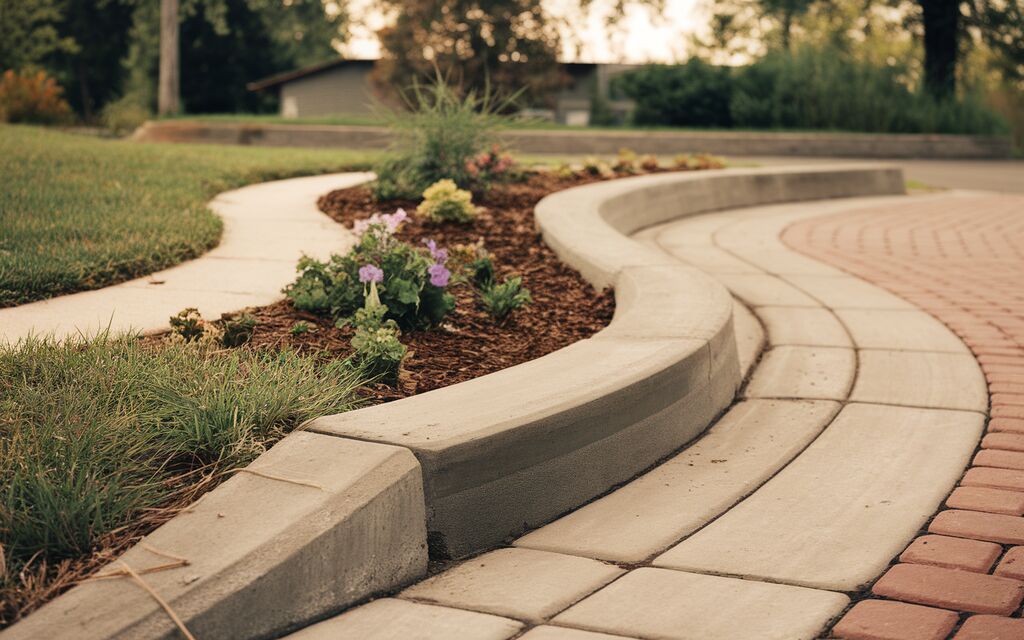
Use Case 1: Preventing Mulch Runoff on Sloping Beds
A homeowner had mulch washing off garden beds during storms. Installing a continuous curbing strip at the bed perimeter effectively holds mulch in place, stabilizing the edge and protecting downstream plantings.
Use Case 2: Defining Pathway Edges in Gravel Walkways
Gravel paths tended to spread into lawns, cluttering turf. Concrete curbing along both sides of the path provides containment and boundary definition, making the path sturdier and easier to maintain.
Use Case 3: Enhancing Driveway Edges
Driveway edges were eroding and losing definition. Decorative curbing added a sturdy border that resists vehicle overrun and visually links the driveway edges to garden beds and walls around the home.
Use Case 4: Structuring Sloped Terraced Garden Beds
On hilly terrain, soil erosion and bed definition were challenges. Multi-level curbing segmented terraces, held back soil, created planting zones, and gave a clean, tiered look to the slope.
Frequently Asked Questions (FAQ)
1. How thick should concrete curbing be?
A typical residential curbing cross-section is 3 to 4 inches thick at the top, tapering to 5 to 6 inches at the base (or deeper in heavier soil). For commercial or heavy traffic zones, a deeper footing may be required, or embedded reinforcement used.
2. Can concrete curbing crack over time?
Minor hairline cracks may appear due to temperature shifts and ground movement. However, reinforced concrete, proper mix design, and control joints minimize this. Cracks are often insignificant and don’t compromise function.
3. Is it possible to install concrete curbing on curved or irregular layouts?
Yes. Continuous curbing can be shaped to curves and transitions. Curbing machines or flexible forms allow sweeping curves, gradual transitions, or bumps as required by landscape design.