Concrete Landscape Curbing: Ultimate Guide to Durable Borders & Design
Concrete landscape curbing (also known as concrete curbing or continuous concrete edging) is a high-performance method for defining garden beds, walkways, driveways, and lawn borders with permanence and style. This guide provides deep insight into how concrete curbing works, why it’s chosen, how technology improves it, real examples, benefits, use cases, and answers to common questions.
What Is Concrete Landscape Curbing & Why Choose It
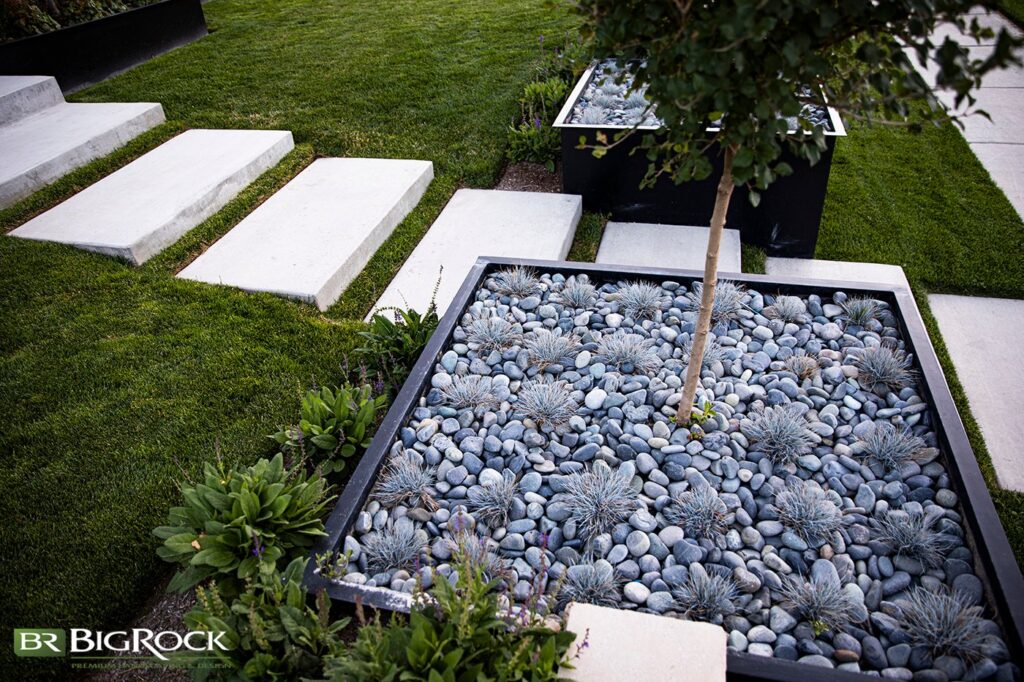
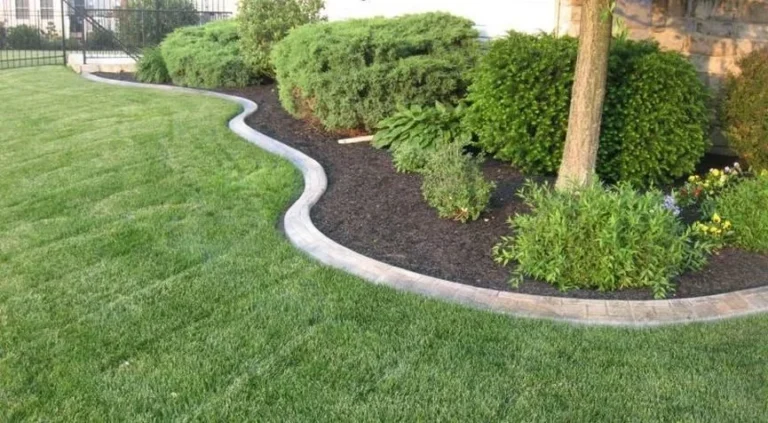
Concrete landscape curbing refers to a continuous concrete border installed along planting beds, turf, driveways, or walkways. Unlike segmented pavers or individual blocks, curbing is generally formed or extruded in place as one continuous ribbon of concrete, often reinforced with steel cable, rebar, or fiber additives.
Compared to other edging materials (plastic, metal, wood, stone), concrete curbing offers unmatched permanence, structural integrity, and design flexibility. It can follow graceful curves, incorporate stamped textures, accept integral coloring, and serve as both aesthetic and protective borders. Because the curbing is continuous, it resists weed intrusion, shifting, and gaps that plague segmented systems.
In many landscaping and urban design projects, concrete curbing is chosen where a lasting, clean edge is critical and maintenance must be minimized over years or decades.
Approaches, Styles & Methods in Concrete Curbing
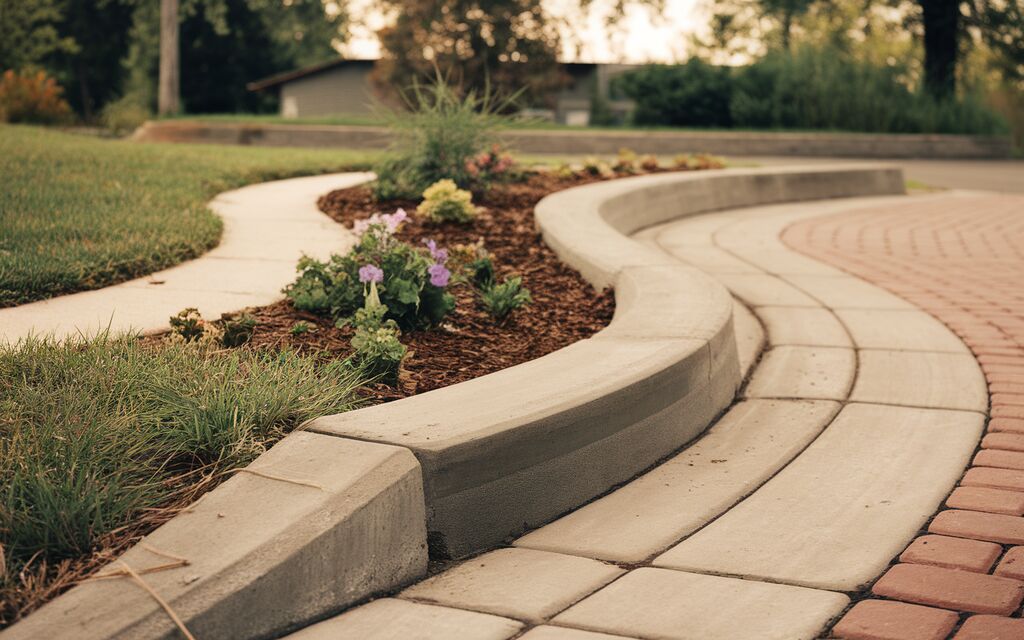
Extruded Continuous Curbing
One prevalent technique is extruded curbing. A specialized machine extrudes wet concrete as it travels along the planned path. As it extrudes, it embeds reinforcement (such as steel cable) within the concrete, ensuring strength and continuity. The machine operator can guide curves, straights, and changes in elevation. This approach minimizes joints, speeds installation over long runs, and yields a smooth, uninterrupted border.
With extrusion, the operator must carefully control alignment, height, slope transitions, and curing conditions. Proper ground prep (grading, trenching, compaction) is essential to avoid sagging or differential settlement.
Poured or Cast-in-Place Concrete Curbing
In this method, forms are built on site (using flexible plywood, form boards, and stakes), and concrete is poured into these forms along the desired border. After it’s placed and compacted, finishing, stamping, or surface treatments are applied, and forms are stripped once curing permits. This method is versatile and good for smaller or custom segments that may not suit continuous extrusion.
Poured curbing allows more control over localized details (e.g., transitions, ends, tie-ins to paths), but requires careful form stability, vibration/tamping, and curing practices to avoid defects.
Precast Modular Curbing
Another method uses precast concrete segments or panels that are manufactured off-site and installed in series to form a border. These panels can be shaped, colored, or textured in the factory, and then placed on a prepared base. This is less common but useful when consistency and controlled manufacture are priorities, and where continuous extrusion is not feasible.
Precast panels require precise leveling and joint treatment to maintain continuity over time.
Styles, Textures & Finishes
Concrete curbing isn’t limited to plain grey. Some stylistic options include:
-
Stamped or textured surfaces: mimicking stone, brick, cobble, or natural motifs
-
Integral coloring or stains: adding pigment to the concrete mix or applying color treatments
-
Exposed aggregate or sand-washed finishes: revealing aggregate surfaces
-
Carved or sculpted edges: to give natural, irregular stone shapes
-
Control joints, relief cuts, or intentional breaks: to manage cracking in longer runs
These stylistic elements allow the curbing to blend or contrast with surrounding paving, architecture, or plant palettes.
Benefits & Advantages of Concrete Landscape Curbing
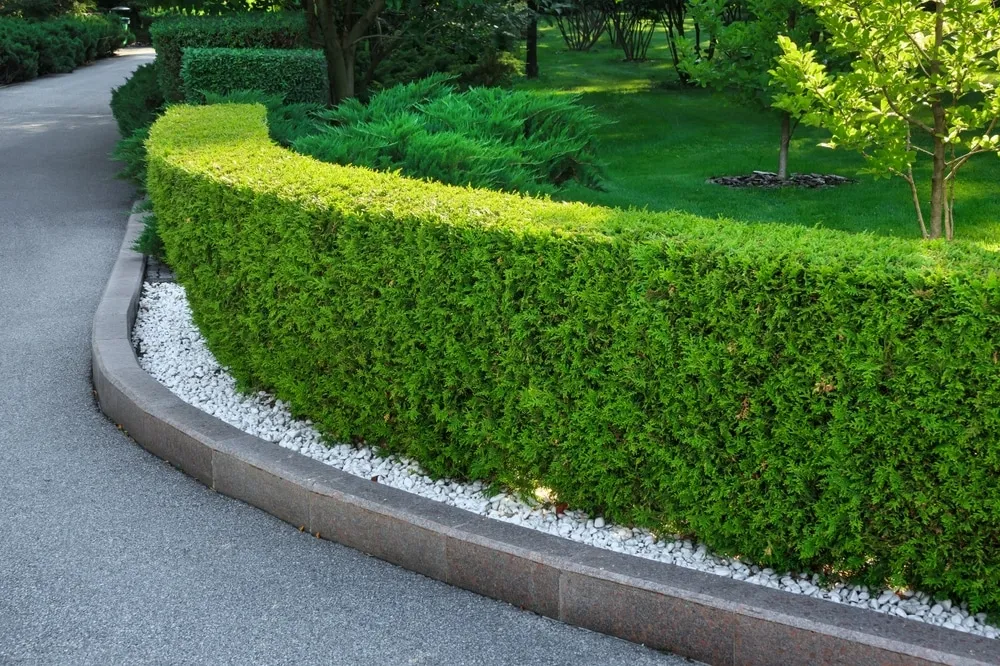
Long-Term Durability & Structural Integrity
Concrete curbing, when properly designed and reinforced, offers decades of performance. It resists rot, insect damage, UV degradation, and warping, common failure modes of wood or plastic. Because it’s continuous and reinforced (e.g., with steel cable or fiber), it better distributes stresses and resists cracking or movement. The elimination of frequent joints means fewer weak points where failure may occur.
Crisp Edge Definition & Material Containment
One of the biggest advantages is the sharp, stable boundary it provides. Concrete curbing keeps mulch, soil, gravel, or decorative rock securely within planting beds and prevents encroachment onto paths or lawn. This control dramatically reduces cleanup and maintenance. Turf and weed incursion are minimized because there are no gaps or planting crevices.
Integration & Aesthetic Flexibility
Because concrete curbing can be shaped, colored, textured, or stamped, it can be visually integrated into the overall landscape. The edge ceases to be a purely functional strip and becomes a design element. For example, curbing may echo patio stone patterns or complement façade materials. The flexibility to match curves, angles, and transitions makes it suitable for elegant or organic layouts alike.
Low Maintenance & Reduced Repair Needs
Over time, properly installed concrete curbing demands minimal care. Occasional sealing, cleaning, and minor crack repair may suffice. Unlike segmented systems (blocks, pavers) that shift or settle unevenly, continuous curbing remains stable and resists misalignment.
Root & Weed Barrier
Concrete curbing acts as a subterranean barrier. Grass and weed roots have more difficulty infiltrating planting beds across the curbing line, reducing weed pressure and helping preserve bed integrity.
Performance Under Load
In zones near driveways, walkways, or heavy foot traffic, concrete curbing better resists impact and lateral force than softer materials. In some configurations, it can also help retain soil or mulch on slopes, serving as a light retaining border.
Technological Enhancements & Modern Innovations

Embedded Reinforcement & Fiber Technology
Instead of relying solely on rebar, many modern curbing systems integrate high-tensile steel cables, microfibers (steel or synthetic), or polymer fibers. These additions improve crack resistance, flexural strength, and durability under stress.
Advanced Curbing Machines & Extrusion Controls
Modern curbing machines are more precise, with improved control over concrete flow, height consistency, slope transitions, and path alignment. Some systems incorporate sensors or guides to maintain a uniform shape even around curves or elevation changes.
Integral Color & Decorative Additives
Rather than applying surface stains later, integral coloring mixes pigment throughout the concrete. This results in more consistent color and durability. Decorative additives, such as mica, glass chips, or contrasting aggregates, further enhance visual interest.
Surface Treatments & Sealers
High-performance sealers embed UV resistance, stain resistance, hydrophobic layers, and anti-graffiti properties. Some sealers also reduce surface dusting and improve longevity, especially in climates with intense sun or frequent moisture.
Sustainable Mix Designs
As sustainability becomes more critical, many mix designs now include recycled aggregates, supplementary cementitious materials (like fly ash or slag), and water-reducing admixtures to lower the carbon footprint.
Real-World Examples & Case Illustrations
Below are several real-world curbing systems or implementations that showcase potential, design decisions, and lessons learned.
Example 1: Cedar Creek Signature Curbing
Cedar Creek is known for decorative, hand-crafted concrete landscape edging. Their signature curbing often features multiple colors, textures, and sculptural design, such as “Cedar Creek Slate” or “Kettle Moraine Stone,” to resemble natural stone while offering the continuity of curbing.
Details & Relevance
-
The textured, multicolor finish helps the edge blend into the surrounding landscaping rather than stand out as stark concrete.
-
The use of continuous cable reinforcement minimizes cracking and movement
-
Their design often softens mower lines, improving ease of maintenance
-
The aesthetic flexibility (stone mimicry, carved detail) shows how concrete curbing can be more than utilitarian
This example demonstrates how curbing can be elevated into an aesthetic focal component rather than a secondary border.
Example 2: Precision Concrete Edging (Curb Creations)
Curb Creations emphasizes precision in line quality, elevation consistency, and design tie-ins. Their approach focuses on high standards in straight runs, transitions, stamping, and durable reinforcement.
Details & Relevance
-
Emphasis on operator skill for straight lines and consistent height demonstrates that technique matters.
-
They highlight the ability to manage elevation changes and slopes, showing curbing works even on uneven terrain.
-
They use integral color and stamping to integrate edges with hardscape
-
They guarantee matching tie-ins to driveways, sidewalks, and existing structures
This real-world example shows how professionalism and detail orientation are crucial to achieving high-quality curbing.
Example 3: Dundee Decorative Colored Curbing
Dundee emphasizes decorative, colored curbing with a variety of styles. Their use of pigments, textures, and design variations shows how curbing can make a visual statement while retaining functional strength.
Details & Relevance
-
They showcase multiple color options to match landscape palettes
-
They apply stamped or textured styles (e.g., Spanish tile, stone pattern) to give variation
-
They emphasize that curbing is not just a boundary but part of the design layer
-
Their projects show curbing used around beds, walkways, and transitions in public or residential settings
This example underscores the design potential of curbing how aesthetics and function can coexist.
Example 4: Border Magic Natural Designer Series
Border Magic’s Natural Designer Series offers fully custom continuous curbing that replaces traditional wood, brick, or metal edging. Their branding emphasizes design freedom, custom textures, and integration with existing landscape architecture.
Details & Relevance
-
Their curbing can follow any curve or angle seamlessly
-
They offer a wide variety of surface styles and colors
-
They pose curbing as a long-term replacement for lesser edging materials
-
Their approach positions curbing as both an aesthetic and structural upgrade
This shows how curbing can act as both protection and beautification, often supplanting weaker edges.
Use Cases & Problem-Solving Scenarios
Use Case: Defining Garden Beds & Mulch Borders
Perhaps the most common use: creating a defined boundary between planting beds and lawn or paths. Curbing prevents mulch or soil from spilling, stops turf intrusion, and maintains crisp lines. In front yards, it enhances curb appeal visibly.
Use Case: Erosion Control in Sloped Landscapes
In sloped gardens, curbing can retain soil or mulch from sliding downhill during rain. Properly anchored curbing, tied into grading and drainage, acts as a stabilizing border. For steep slopes, curbing may tie into small retaining walls or terraces.
Use Case: Walkway & Driveway Edge Protection
Along driveways or paths, curbing ensures that gravel, planting, or decorative rock remains in place. It also protects pavement edges from encroaching soil or root lift. In high-traffic zones, concrete curbing better resists damage than softer materials.
Use Case: Commercial / Institutional Landscapes
For parks, campuses, and public spaces, durability and low maintenance are paramount. Continuous concrete curbing helps maintain consistent design language, reduces repair labor, and withstands heavy usage and climatic stresses.
Use Case: Combining Hardscape Materials
Where landscapes mix turf, pavers, gravel, stepping stones, and planting beds, curbing serves as the boundary that keeps each material separate yet visually integrated. It prevents mixing of materials (e.,g. gravel spilling into the lawn) and clarifies zone transitions.
Best Practices & Guidelines for Effective Curbing
-
Begin with a detailed layout: stake, paint, or string lines indicating the intended path before trenching.
-
Excavate and grade properly: consistent depth and compacted base (often gravel or compacted soil) is essential.
-
Choose proper reinforcement: cable, rebar, or fiber reinforcement reduces cracking and extends life.
-
Use expansion or relief joints at logical intervals to manage shrinkage stresses.
-
Mix concrete with a proper water-cement ratio, additives, and admixtures to reduce shrinkage and improve strength.
-
Apply finishing and surface treatments (color, texture, sealers) before final cure.
-
Manage curing: protect from rapid drying, extreme heat, or rain during the initial set.
-
Tie edges into existing structures (driveways, sidewalks) with smooth transitions.
-
Where mower access is needed, design edges to allow lawnmower wheels or blades to run close without damaging the edge.
-
Inspect and maintain minor cracks early; reseal periodically to preserve surface integrity.
Frequently Asked Questions
Q1: How long will concrete landscape curbing last?
A: With proper design, reinforcement, and curing, concrete curbing can last 20 to 30 years or more. Performance depends on soil conditions, load, climate cycles, exposure, and maintenance (crack sealing, re-sealing).
Q2: Will concrete curbing crack?
A: Yes, like all concrete, it has the potential to crack. But good design (reinforcement, control joints, quality mix, proper curing) mitigates major cracking. Minor hairline cracks are common but typically not structural.
Q3: Can I integrate curbing with existing landscape or features?
A: Absolutely. Curbing can tie into paths, patios, driveways, retaining walls, and planting beds. Transition details are critical, blending heights, textures, and mmaterialsensuringres the curbing doesn’t look tacked on but integrated.